

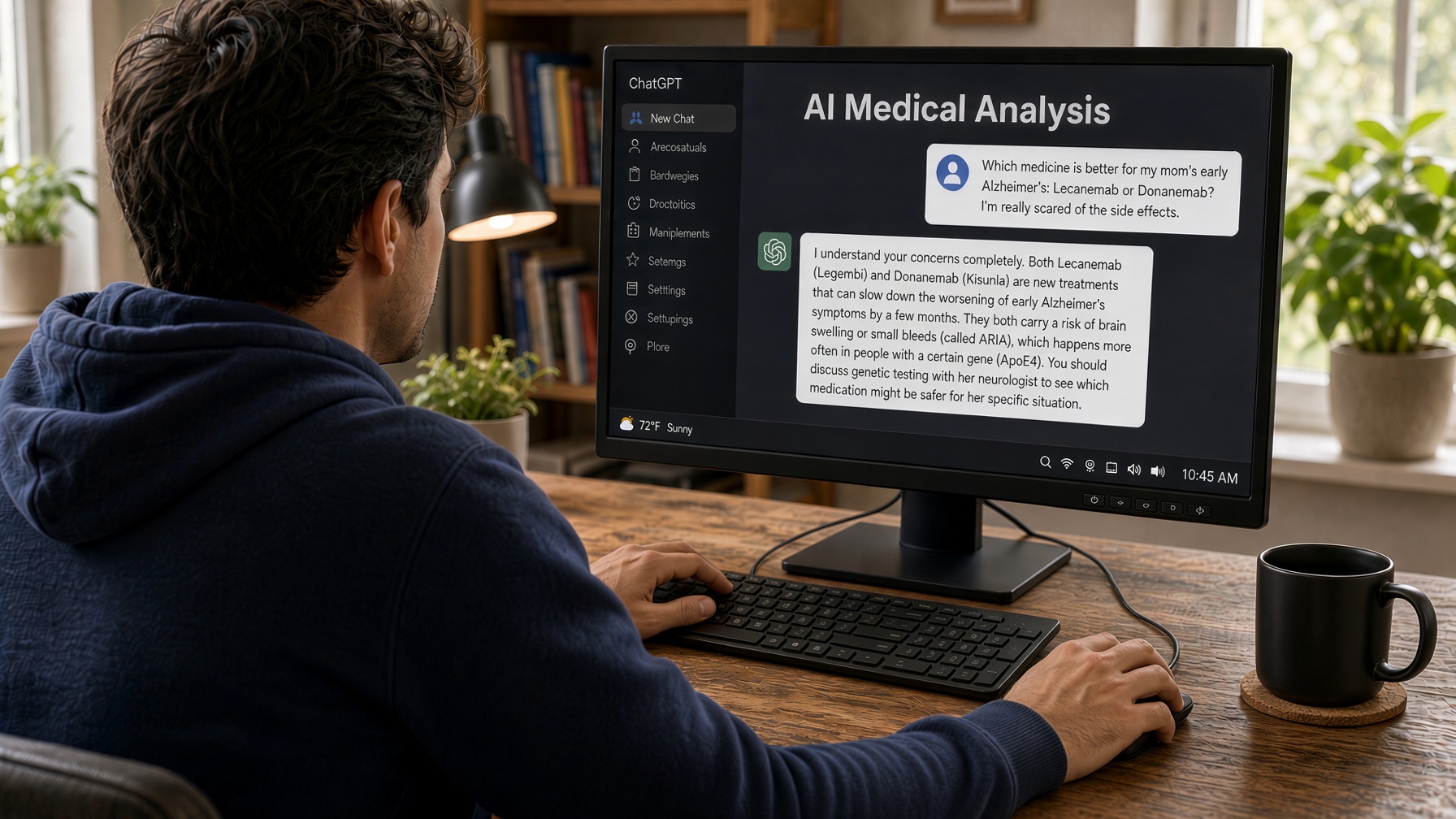
AI search citations can create a strange attribution problem for medical societies. A medical society can spend months convening experts, reviewing evidence, managing conflicts, reaching consensus, and publishing a clinical guideline. Then a clinician asks an AI tool a question the guideline answers, and the citation points to the journal host, a database, a hospital system, or another site.
That can feel backwards, especially when the society did the work. Usually, though, there is a fairly ordinary reason for it: the AI answering the question found another page that was easier to retrieve, understand, or use as support.
That creates a real attribution problem for medical and professional societies where the organization owns the expertise while another domain becomes the visible source.
For the broader discovery problem, see Clyck’s guide to AI discoverability for medical societies.
AI search systems are not looking at institutional history the way a person on a board might. They are working from pages they can retrieve, search indexes, source relationships, and the content available when the question is asked. Google says its generative search features rely on the same core ranking and quality systems used elsewhere in Search, and pages still need to be crawlable, indexable, and available in textual form to be eligible as supporting links. OpenAI gives publishers similar guidance for ChatGPT search and says public sites should allow OAI-SearchBot if they want their content to be discoverable, surfaced, cited, and linked.
So strong intellectual property is only part of the equation. Which shows that a society also needs a useful first-party version of that expertise on the open web.
Health AI systems already lean toward institutional sources
The available citation research is actually encouraging for medical societies because they are not trying to overcome an AI preference for random blogs or low-quality health content.
A 2026 preprint analyzing 615 ChatGPT citations across consumer health questions found that 75.7% came from established institutional sources, with professional associations accounting for 8.6% of the total. A separate 2026 preprint analyzing 10,038 Claude health citations found that established institutional sources accounted for 97.8% of citations, with professional associations and advocacy organizations representing 28.4%.
Both studies are preprints, so they should be treated as directional rather than settled science. Even with that caveat, there is a pattern there that is useful: professional associations are already a meaningful source category in AI-mediated health answers.
The harder problem is what happens when several credible sources could answer the same question. Meaning a society may have the underlying authority, but if its own page is content thin or indirect, another source can still become the one the system selects and cites.
Why AI search citations can go to publisher pages
1. The society page points to the answer instead of containing it
A society may have a guideline landing page with the title, publication date, and a button that sends the reader to the journal. The publisher page, meanwhile, may contain the abstract, authors, references, full text, or simply a much better explanation of what the guideline covers.
For a person viewing these, the society page still communicates ownership because they understand the relationship between the organization and the journal. For an AI trying to support an answer, the publisher page may simply be the more useful source.
2. The most useful version of the content lives on another domain
There is nothing inherently wrong with this arrangement because journals provide peer review, distribution, indexing, version control, and a durable scholarly record. The attribution gap appears when the society’s own site contributes very little beyond the outbound link.
An AI does not need to misunderstand the society’s role for the publisher to receive the citation. It only needs to retrieve the publisher page as the better supporting source for the answer it is generating.
3. The society’s expertise is fragmented
A society may have part of the answer in a PDF, another part in a journal article, a committee page somewhere else, a meeting presentation in an archive, and related material behind a member login. A clinician asks one question, while the society has several partial answers living in different places.
A hospital, publisher, government site, or commercial health-information site may have one clear public page that addresses the same question in a single place, which does not make it more authoritative by default, but it can make it easier to use.
4. The page is written around the organization instead of the question
Societies naturally think in terms of committees, programs, publication names, initiatives, awards, and internal acronyms because that is how the organization operates. The people looking for the information are more likely to ask about treatments, guidelines, grants, registries, meetings, certification, or a specialty-specific problem.
Modern search systems are much better at semantic matching than they used to be, so this is not an argument for stuffing exact-match keywords into every heading. Google explicitly warns against scaled content created primarily to influence search or generative responses. The practical point is pretty simple: write pages that explain, in normal language, what the resource is, who it is for, what the society’s role is, and what question it helps answer.
5. The society’s role is not stated clearly
Developing a guideline, convening the panel, endorsing a recommendation, funding the research, operating a registry, and sponsoring a publication are different relationships. Those distinctions are going to be important to clinicians, and they also give search systems clearer information about how the organization is connected to the work being done. A page that says only “read the guideline” leaves a surprising amount of useful context unstated.
How medical societies can strengthen first-party attribution
Societies do not need to duplicate every journal article or move every valuable member resource onto the public site. The practical goal is going to be more focused on making sure the organization has a strong first-party page for the subjects and assets it has a legitimate reason to own.
Build a companion page for each must-own asset
For a major guideline, consensus statement, registry, grant program, or other important society resource, create an open page on the society’s domain that explains what the resource is, the clinical or professional question it addresses, the society’s exact role, when it was published or updated, and where the authoritative full text or primary record lives.
This means that page does not need to reproduce copyrighted publisher content. So its job is to give people and AI a useful first-party source that clearly establishes how the society is connected to the work.
Put important information in HTML
PDFs are still useful and often necessary, but when a PDF is the only meaningful public representation of a high-value resource, the society is making the path to find the information harder than it needs to be. For must-own topics, pair the file with a useful HTML page that explains the substance and the society’s role.
Google’s current guidance for AI features continues to emphasize the same basic search fundamentals: content should be crawlable and indexable, important information should be available in text, internal linking matters, and structured data should match what is visible on the page.
Connect the society’s expertise
A guideline should connect to related education, experts, meetings, registries, patient resources, quality programs, or other relevant material when those relationships are real. Meanwhile, internal links help people navigate the subject and help search systems understand how the society’s content fits together, especially when expertise is spread across programs or subdomains.
Keep the technical foundation boring
Of course the technical work matters, but it should stay pretty boring, as odd as that may sound. Google says there is no special schema required for AI Overviews or AI Mode, no requirement to break content into tiny “AI-friendly” chunks, and no search visibility benefit from llms.txt. For ChatGPT search, OpenAI tells publishers to allow OAI-SearchBot if they want public content to be eligible for summaries and citations. These are worthwhile checks because they keep the door open but do not decide who gets cited once several credible sources are available.
Test attribution instead of assuming it
Start with five to eight questions in an area where the organization has a legitimate claim to authority. They might cover a guideline or consensus statement the society developed, a registry it operates, a grant it administers, an educational resource, or a question about which organization publishes or maintains a particular standard.
Ask those questions without using the society’s name, then look at the answer the way a prospective member, clinician, or researcher would. Is the society mentioned? Is its own domain cited? Does the citation go to a publisher or database instead? Is another organization selected? If the society should have been a strong first-party source, is there actually a page on its own site that gives the system a good reason to use it?
Run the same questions again later before treating any of those answers as a finding that the society is or isn’t found. AI results vary by platform, model, session, and time, so a single response is a snapshot rather than a permanent ranking.
This exercise is valuable because it shows where the society’s authority is already clear and where the public representation of that authority is weak. Sometimes the fix can be technical but more often, the issue is that the society has never created a strong public page that explains the thing it already owns.
What this approach does not require
This does not require creating hundreds of pages for every possible prompt, inventing a proprietary AI-visibility score, replacing the journal publisher, or putting every member benefit in public.
What it does require are some choices. A society has to decide which subjects, questions, and assets are important enough that the organization should have a clear first-party presence for them. Once those are identified, the public page should make the relationship obvious, explain the resource in useful language, and point readers to the authoritative record.
That approach goes beyond AI search because it also improves the experience for people using traditional search, prospective members trying to understand the organization, and clinicians who simply want a direct answer.
The larger issue is attribution
A lot of the AI-search conversation for medical societies gets simplified to whether the organization “shows up.”, which is useful to check, but it is not enough.
A society can appear by name and still lose on the questions being asked about one of their specialty areas. Its experts can create the underlying guidance while the citation goes somewhere else. The organization can be perfectly recognizable as an entity while its guidelines, registries, programs, and expertise remain hard to connect to the questions clinicians are actually asking.
A better test is whether the society’s authority is being selected and attributed when the subject is genuinely its own. That is why first-party content, information architecture, technical accessibility, internal linking, and traditional SEO all end up in the same conversation. None of them can guarantee an AI citation, but together they give the society a much better public representation of the authority it already has.
Frequently asked questions
Why does AI cite a publisher instead of the medical society that created a guideline?
AI cites sources they can retrieve and use to support an answer. If the publisher hosts the clearest or most complete accessible version of a guideline while the society’s page mainly points outward, the publisher may become the cited source. A strong first-party companion page can make the society’s role and the substance of the resource much clearer.
Can a medical society force ChatGPT or Google AI Mode to cite its site?
No. There’s no reliable mechanism that guarantees a citation. A society can improve its eligibility and source clarity by keeping important pages crawlable and indexable, publishing useful first-party information, linking related expertise clearly, and accurately describing its relationship to the underlying work.
Should a society republish the full guideline on its own website?
Only when publishing rights allow it and doing so is useful for readers. In many cases, a first-party companion page is enough as it can explain the purpose and scope of the guideline, identify the society’s role, provide useful context, and link to the publisher’s authoritative full text.
Does schema markup guarantee AI visibility?
No. Google says there is no special schema required for its generative AI search features. Structured data remains useful when it accurately represents visible content and supports normal Search features, but it does not guarantee selection or citation.
What society content should remain public?
That depends on the membership model, publishing rights, and the resource itself. In general, the public site should contain enough information for prospective members, clinicians, search engines, and AI systems to understand what the society does and why it is authoritative on the subjects it genuinely owns. Deeper tools, education, community, and member-specific value can still remain gated.
If you want to see where your society is being selected, cited, or skipped, start with Clyck’s 20-minute AI visibility audit for associations: